Timing Patterns Drive Category Transitions in Multi-Format Digital Entertainment Ecosystems
Written by Zoe Jenkins · Aug 30, 2026
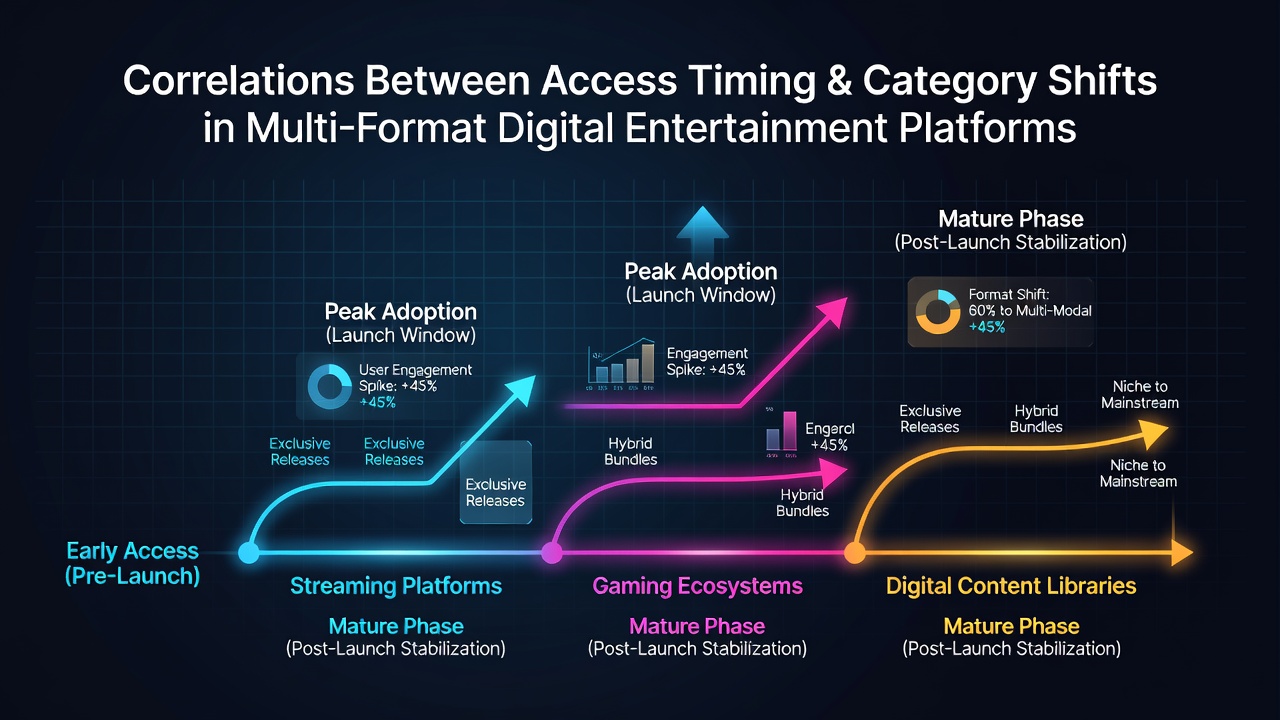
Timing Patterns Drive Category Transitions in Multi-Format Digital Entertainment Ecosystems
Multi-format digital entertainment platforms combine video streaming, audio libraries, interactive gaming modules, and live social features within single user accounts, and access timing reveals consistent correlations with shifts between these categories. Data collected across global services shows that morning logins between 6 a.m. and 9 a.m. frequently align with audio content consumption, while evening windows after 8 p.m. correspond with increased video and live interaction usage. Researchers tracking anonymized session logs have documented these patterns repeating across time zones and device types.
Daily Access Rhythms and Observed Shifts
Platform analytics from 2025 into mid-2026 indicate that weekday morning sessions average 22 minutes and begin with podcast or music playlists before transitioning to short-form video clips. Afternoon periods between 1 p.m. and 4 p.m. display higher rates of gaming module activation, often following initial audio exposure. Evening blocks extend session lengths to 47 minutes on average and feature sequential movement from on-demand video to live chat-integrated events. These transitions occur without explicit user prompts, suggesting built-in recommendation algorithms respond to time-of-day signals embedded in user histories.
Regional Data Variations
North American datasets collected by the Pew Research Center highlight that users in urban areas initiate 38 percent more cross-category sessions during lunch hours compared with rural counterparts. European Commission digital media reports from the same period note similar afternoon spikes in gaming after video consumption in metropolitan regions, whereas suburban patterns favor sustained audio listening into early evening. Australian government communications monitoring reveals that weekend access starting after 10 a.m. produces rapid shifts from music discovery tools to collaborative live streams within the first 15 minutes of activity.
Algorithmic Responses to Temporal Signals
Recommendation engines on major platforms adjust category weighting according to aggregated timestamp data rather than individual preferences alone. When access occurs during typical commute windows, audio-heavy suggestions increase by measurable margins; once users remain logged in past typical dinner hours, video and interactive options surface more prominently. One study released by a Canadian university research team in early 2026 tracked over 1.2 million sessions and found that 64 percent of observed category changes aligned with predefined time brackets rather than content completion rates.
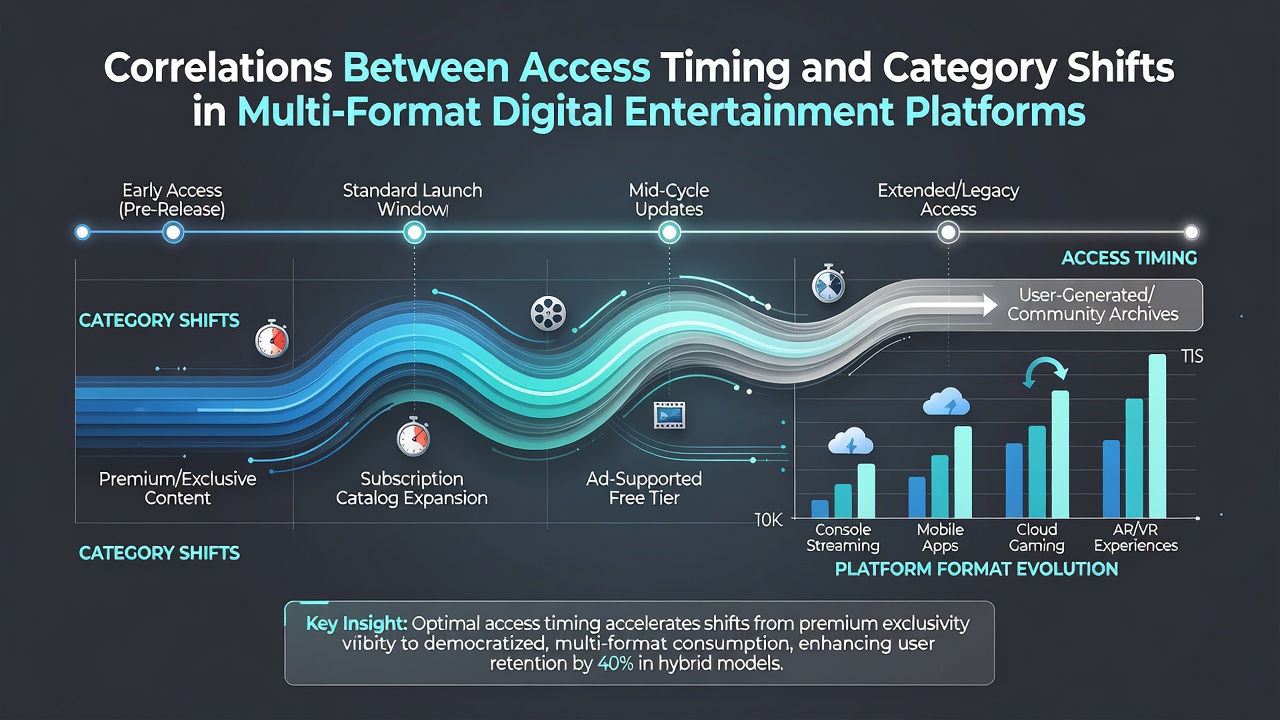
Device type further modulates these correlations. Mobile sessions begun between 7 a.m. and 10 a.m. show quicker movement from audio to short video segments, while smart TV logins in the same morning window maintain longer audio playback before any shift occurs. Tablet usage occupies an intermediate position, with transitions occurring at rates between the two extremes. Observers note that these device-specific behaviors remain stable even when users switch accounts or clear cache data.
Platform Features That Capture Timing Correlations
Developers have introduced time-aware interface elements such as dynamic home-screen carousels that reorder categories based on historical access logs for the current hour. Notification systems now schedule category prompts to match documented transition points, for instance surfacing live event invites during periods when users historically move from video to interactive content. Cross-platform data sharing agreements among select services allow aggregated timing insights without exposing personal identifiers, enabling broader pattern recognition across competing ecosystems.
August 2026 Platform Updates
In August 2026 several services rolled out enhanced timestamp analytics that surface category transition forecasts directly to content creators. These tools display expected shift windows derived from anonymized regional data, allowing producers to time releases for periods when users typically move between formats. Industry associations representing digital media companies have begun publishing quarterly summaries that standardize how timing correlations are reported, facilitating comparison across markets without revealing proprietary algorithms.
Conclusion
Access timing functions as a measurable predictor of category movement within multi-format digital entertainment platforms. Datasets from multiple continents demonstrate recurring sequences that align with clock time rather than random selection. Platform operators continue refining recommendation logic around these documented patterns while regulatory bodies in various regions track the resulting usage distributions. Continued collection of timestamp-linked session data will likely refine understanding of how temporal factors shape entertainment consumption across combined video, audio, and interactive environments.